Freddie Mercury and Mary Austin: A Love Story Beyond Boundaries (and Sexuality)
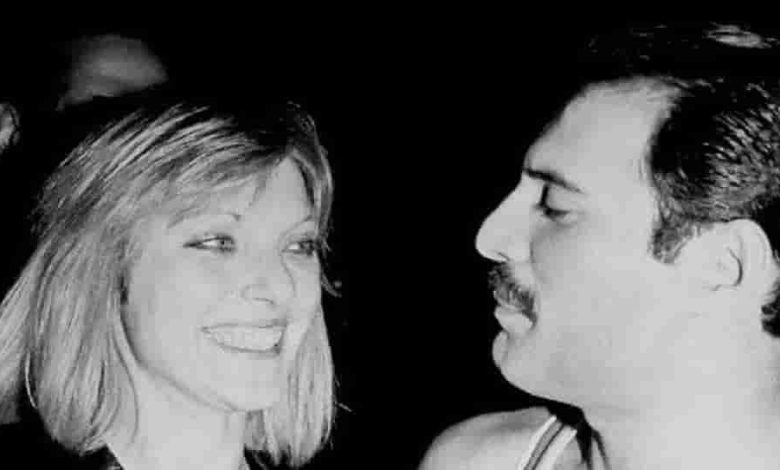
Who doesn’t know Freddie Mercury?
Queen’s vocalist wasn’t just a musical genius with an incredible vocal range and theatrical stage presence.
His life, including his love stories, was equally legendary and colorful. Among the many people who passed through his life, one name always stands out: Mary Austin.
Mary wasn’t just an ex-girlfriend; she was Freddie’s ‘true love,’ even after they were no longer romantically involved.
Their story is unique, complex, and honestly, it makes us wonder: how could that be?
The Beginning and Freddie’s ‘Love of My Life’
Freddie met Mary in 1969, long before Queen became as big as they did. At the time, Mary worked at the Biba fashion boutique in Kensington, London.
They immediately clicked and fell in love. For several years, they lived together in an apartment in West Kensington and even got engaged.
For Freddie, Mary was everything. He once said, “All my lovers asked me why they couldn’t replace Mary. It’s because it’s simply impossible.”
How could it not be a passionate relationship? Freddie even wrote the super romantic song “Love of My Life” for Mary!
This song became an anthem for millions and still gives goosebumps. It’s clear proof of how deeply Freddie felt for Mary.
Freddie’s Honesty About His Sexuality
Their physical and romantic relationship lasted for several years.
But as time went on, and Queen’s career soared, Freddie began to realize something about himself.
In 1976, Freddie finally plucked up the courage to confess to Mary that he was bisexual.
Mary’s response?
Iconic.
She looked at Freddie and casually said, “I think you’re gay.” Mary’s reply shows how well she knew Freddie, perhaps even better than Freddie knew himself.
So, was Mary disgusted after hearing Freddie’s confession?
Although the confession ended their romantic and physical relationship, Mary Austin showed no signs of disgust.
On the contrary, from Mary’s own accounts and those of close friends, she seemed relieved that Freddie could finally be honest about himself.
Mary admitted that she had noticed changes in Freddie and that he was hiding something.
With the confession, the burden Freddie carried was lifted, and he became his cheerful self again.
Mary even felt that the confession was a part of Freddie she had to accept and support. She wanted Freddie to be his authentic self.
This demonstrates Mary’s extraordinary level of maturity and love for Freddie, which transcended a mere physical relationship.
This confession indeed marked the end of their romantic relationship.
They parted ways as a couple, but it was from that moment that their friendship grew even stronger and unbreakable.
Staying Close Until the End of His Life
Even after they broke up, Mary remained a crucial pillar in Freddie’s life.
She moved into an apartment near Freddie’s home and continued to support him. Freddie often referred to Mary as his “common-law wife” and the person he could trust the most.
When Freddie was diagnosed with AIDS in the late 80s, Mary was one of the foremost people caring for him.
She was by Freddie’s side in his final moments, a silent witness to the legend’s struggle. This shows their bond transcended conventional definitions of love.
It was no longer about a romantic relationship but more about a soul connection and true friendship.
Did Mary Austin contract HIV or AIDS?
There is no evidence to suggest that Mary Austin ever contracted HIV or suffered from AIDS.
Although they had a sexual relationship early on, and Freddie was later diagnosed with HIV, this doesn’t automatically mean Mary was infected.
HIV infection occurs through the exchange of certain bodily fluids, and the risk of transmission varies.
After Freddie’s confession in 1976, their physical relationship ended.
So, Mary had no risk of contracting HIV from Freddie after that period. Mary Austin is still alive today and lives in Freddie’s house, which he bequeathed to her.
Did Freddie want to have sex with Mary while he had AIDS?
There is no information or indication that Freddie Mercury wanted to have sex with Mary Austin while he had AIDS.
After his bisexual confession in 1976, their physical relationship ended. Mary and Freddie maintained a very deep platonic friendship.
By the time Freddie had AIDS, his condition was worsening, and he was accompanied by Jim Hutton as his partner, as well as Mary and other close friends who provided emotional and physical support.
His primary focus was on battling his illness, and physical intimacy was no longer part of their dynamic.
Legacy for Mary and Freddie’s Journey of Sexuality
What’s truly astonishing is Freddie’s decision regarding his inheritance. After his death in 1991, Freddie bequeathed the vast majority of his estate to Mary.
This included Garden Lodge, Freddie’s lavish home in Kensington, and a significant portion of the royalties from his music.
Additionally, he also ensured his parents and sister received financial support.
This is clear evidence of how much Freddie valued Mary. He lived a “no regrets” lifestyle, as people often say, but he always treated Mary with respect and chivalry.
Now, let’s talk about Freddie’s sexuality, which often sparks curiosity:
Was Freddie truly gay or bisexual?
Initially, Freddie had serious relationships with Mary and dated other women before Mary. This indicates his attraction to women.
However, over time, and especially after Queen’s fame peaked, Freddie openly began relationships with men.
Many of his friends and closest associates, including Mary, felt that Freddie was more inclined to be gay, even though he himself initially claimed to be bisexual.
How did Freddie live a bisexual life before leaning towards being gay?
Freddie was a very private person, so specific details about his bisexual phase are hard to know directly from him.
However, from various biographies and testimonies, it can be concluded that at certain periods (around the mid-70s), Freddie might have had simultaneous relationships with men and women, or at least there was a transitional period where he explored his attraction to men while still maintaining an important relationship with Mary.
Some sources even mention he had affairs with men while still with Mary. This was a phase where he tried to understand and accept another side of his sexuality.
Over time, his attraction to men became far more dominant and eventually became his primary orientation.
Sexual identity can evolve and develop over time.
Freddie might have only truly understood and accepted his attraction to men later in life, after his life experiences.
So, it can be said that his journey of self-discovery regarding his sexuality was also a process.
Then, regarding sexual positions, was Freddie a ‘bottom’ or a ‘top’?
Although Freddie was very private about the details of his sex life, from available biographies and testimonies, Freddie Mercury was known for his highly dominant charisma both on stage and in his private life.
These traits often reflected in his sexual dynamics.
Many sources indicate that Freddie tended to take on a ‘top’ or ‘versatile top’ role (meaning he was more often the penetrator, or could be both) in his same-sex relationships.
This aligns with his strong and leading personality.
Who Was Freddie’s Gay Partner at the End of His Life?
Okay, this is the part that often sparks curiosity: who was Freddie’s companion in the final years of his life? His name was Jim Hutton.
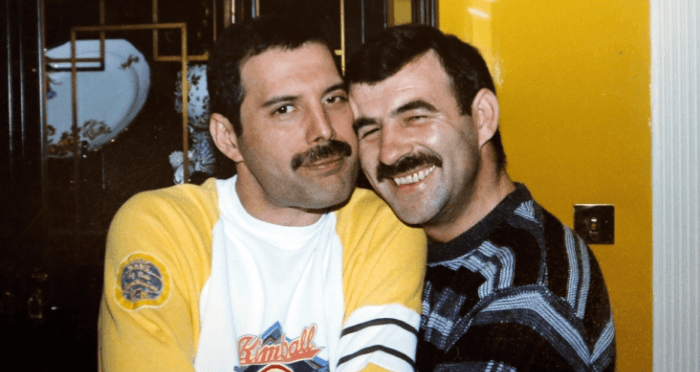
Jim Hutton was a hairdresser who met Freddie Mercury at a gay club called Heaven in London in 1985.
Initially, Freddie approached Jim, but Jim declined as he was in a relationship at the time.
Interestingly, about 18 months later, they met again at the same club, and this time a romantic spark ignited between them.
Eventually, they officially began a relationship and lived together at Garden Lodge, Freddie’s home.
Although they never officially married (as same-sex marriage was not legal at the time), they lived like a married couple.
They even wore rings on their fingers to show their commitment to each other and called each other “husband.”
Jim Hutton was by Freddie’s side for the last six years of his life, and he was there when Freddie passed away on November 24, 1991.
What Happened to Jim Hutton After Freddie’s Death?
This is also an important question.
Yes, Jim Hutton was also diagnosed as HIV-positive. He learned his status a year before Freddie died. However, Jim Hutton did not die from AIDS.
Jim Hutton lived until 2010. He passed away at the age of 60 due to complications from lung cancer, not AIDS.
This is an important fact that is often misunderstood. Jim spent the rest of his life in Ireland, his birthplace, and he wrote a memoir titled “Mercury and Me” which detailed his relationship with Freddie.
Did Jim Hutton, Freddie’s last gay partner, receive an inheritance?
Yes, Jim Hutton did receive an inheritance from Freddie Mercury.
Although Mary Austin received the majority of Freddie’s estate, including Garden Lodge and half of Queen’s future royalties.
Freddie also ensured that Jim Hutton, along with his personal assistant Peter Freestone and chef Joe Fanelli (who was also a former lover of Freddie’s), each received an inheritance of £500,000.
This was a substantial amount in 1991 and allowed Jim to build his own home in Ireland. So, Freddie did ensure Jim was financially secure.
Did Jim Hutton and Mary Austin Help Each Other Care for and Accompany Freddie?
According to accounts and testimonies from Freddie’s closest circle, such as Peter Freestone (Freddie’s personal assistant), Jim Hutton, Mary Austin, Peter Freestone, and Joe Fanelli (a former lover of Freddie’s who also lived at Garden Lodge) all played crucial roles in caring for and accompanying Freddie in his final years.
While there were some reports indicating tension between Mary and Jim after Freddie’s death (especially regarding Mary asking Jim and the others to move out of Garden Lodge), while Freddie was alive and ill, they all collaborated to ensure Freddie received the best care and comfort.
They formed Freddie’s inner circle, and each had their own role in providing emotional and practical support. They were all by Freddie’s side until his last breath.
Did All of Freddie’s Gay Partners Contract AIDS or HIV?
This is a very valid and relevant question given the AIDS epidemic that affected the gay community in the 80s.
Not all of Freddie Mercury’s gay partners or lovers automatically contracted HIV or died from AIDS.
Freddie himself likely contracted HIV in the early 1980s, although his official diagnosis wasn’t until 1987.
At that time, awareness about HIV/AIDS was very low, and many people didn’t know how the virus spread or even that they were infected.
It’s important to remember:
- Not everyone infected with HIV will die from AIDS. With the advancement of antiretroviral (ARV) drugs, HIV can now be managed as a chronic condition. However, in Freddie’s era, these medications were not available or were very limited, so HIV often progressed to fatal AIDS.
- HIV transmission doesn’t always occur with every sexual contact. The risk of transmission depends on many factors, including the type of sexual activity, the use of protection (condoms), and the viral load status of the infected individual.
- Many of Freddie’s relationships were private. We don’t have complete medical records or health histories of everyone who was close to Freddie. Therefore, we cannot definitively say whether all of his partners were infected with HIV.
However, it is true that Freddie lived during the peak of the AIDS epidemic, especially among gay men.
Sadly, many of Freddie’s friends, acquaintances, and some other lovers did indeed die from AIDS-related complications during that period.
This was a great tragedy that affected the gay community and became a dark part of Freddie’s life and the lives of those around him.
For example, Freddie had other partners before Jim Hutton, such as Tony Bastin (a brief relationship in the early 80s) and David Minns (a more serious relationship in the mid-70s), but there is no definitive public information regarding their HIV/AIDS status or cause of death if they are no longer living.
In essence, Jim Hutton is the most well-known and longest-term gay partner of Freddie at the end of his life, and he was indeed HIV-positive but died from other causes, not AIDS.
Beyond that, details regarding the health fates of Freddie’s other partners are very scarce or not publicized.


