Meet the House of Saud: Saudi Arabia’s Royal Family with Mind-Boggling Wealth!
Ever imagined a family whose wealth seems boundless, surpassing even the richest in your wildest dreams?
We’re not just talking about billionaires whose names you hear often; this is an entity that collectively controls a fortune capable of reshaping the global economy.
They are the House of Saud, the royal family holding absolute sway over the Kingdom of Saudi Arabia.
Their wealth isn’t just about personal luxury; it’s an immeasurable geopolitical force, often the subject of documentaries and videos titled “Watch the House of Saud Unveiling the Oil Treasure That Changed the World.”
The Roots of Limitless Wealth
The House of Saud’s immense fortune isn’t a typical business success story; it’s the result of geological destiny and absolute political control.
The primary foundation of their wealth rests on one commodity: crude oil. Saudi Arabia boasts the world’s second-largest oil reserves and is the planet’s largest crude oil exporter.
All of this subterranean wealth, effectively, falls under the House of Saud’s control through their ownership of Saudi Aramco.
Saudi Aramco isn’t just an oil company; it’s an unrivaled global energy behemoth.
Formerly known as the Arabian American Oil Company, it’s now Saudi Arabia’s national oil company.
As the world’s largest oil producer, Aramco has a daily production capacity reaching millions of barrels.
With a market valuation that once touched over 2 trillion US dollars, Saudi Aramco is the very core of the House of Saud’s prosperity.
Every drop of oil pumped from the Arabian desert, every dollar generated from crude oil sales on the global market, ultimately flows into the coffers of this kingdom.
This isn’t merely revenue; it’s an extraordinary source of economic and political power.
Manifestations of Luxury

Rumors of the House of Saud’s ultra-luxurious lifestyle have become a global urban legend. And, frankly, many of these rumors do have a basis in truth, though sometimes they’re exaggerated.
1. Château Louis XIV
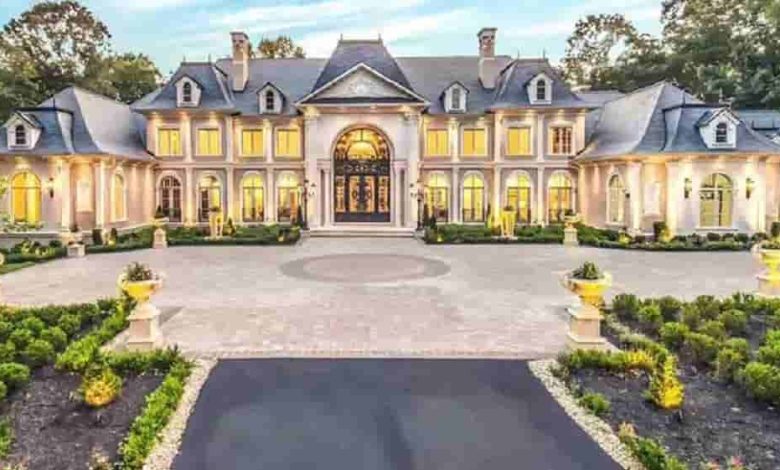
One of the most astonishing purchases was the Château Louis XIV (House of Saud Palace) in Louveciennes, near Paris, France.
This magnificent palace was reportedly bought in 2015 for around 300 million US dollars by a shell company eventually traced back to Crown Prince Mohammed bin Salman (MBS).
The Château is equipped with a private cinema, a giant aquarium, and indoor-outdoor swimming pools.
It’s not just a house; it’s a modern architectural masterpiece blending cutting-edge technology with 17th-century aesthetics.
This acquisition clearly shows how the House of Saud’s wealth allows them to acquire the world’s most exclusive properties.
2. The Da Vinci Painting
In 2017, the art world was stunned by the sale of Leonardo da Vinci’s Salvator Mundi painting for over 450 million US dollars.
This painting became the most expensive work of art ever sold at auction.
The buyer?
Once again, the trail led to the inner circle of the House of Saud, with Crown Prince Mohammed bin Salman believed to be the ultimate purchaser.
This acquisition demonstrates how the House of Saud invests not only in traditional properties or assets but also in priceless historical and artistic heritage.
3. Mega-Yachts and Private Jet Fleets
Stories about mega-yachts owned by members of the House of Saud also frequently circulate.
For instance, yachts like “Serene” or “Pegasus VIII” (once owned by family members) boast incredible facilities, ranging from helipads and cinemas to expansive swimming pools.
Their acquisition and operational costs can reach hundreds of millions of US dollars.
Furthermore, they maintain a fleet of private aircraft comprising various types of executive jets, allowing for unlimited and ultra-fast global mobility.
This lifestyle clearly reflects extraordinary wealth.
While not every family member might possess gold toilets, the concept of limitless luxury is a reality for many of them.
Who Are the Members of the House of Saud?
The House of Saud is an incredibly large royal family, with thousands of members spread across various branches.
This isn’t a small family with just a few individuals.
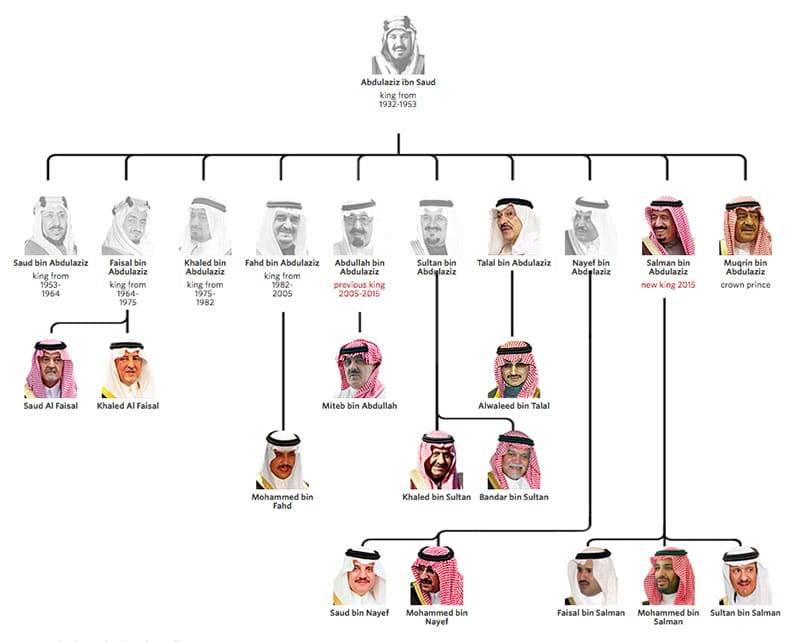
The dynasty was founded in the 18th century by Muhammad bin Saud, and its power was solidified by his successors, especially Abdulaziz bin Saud, the founder of the modern Kingdom of Saudi Arabia.
The family structure is highly hierarchical, with supreme power resting in the hands of the King of Saudi Arabia.
Currently, King Salman bin Abdulaziz Al Saud is the absolute monarch of Saudi Arabia.
The specific net worth of the King of Saudi Arabia is difficult to ascertain because his personal wealth is deeply integrated with state and family wealth, but he is undoubtedly one of the wealthiest individuals globally.
Key and influential House of Saud members include:
- King Salman bin Abdulaziz Al Saud: The current King and Custodian of the Two Holy Mosques.
- Crown Prince Mohammed bin Salman (MBS): The Crown Prince, Deputy Prime Minister, and Minister of Defense. He is the most powerful figure in Saudi Arabia after the King, often considered the architect behind the Vision 2030 economic and social reforms.
- Senior Princes and Princesses: Members of the family hold various important positions in government, the military, and business. They are also often in the news for their lavish lifestyles or their roles in diplomacy.
There are also many House of Saud Princesses who, while not directly involved in governance, often serve as public figures in social, cultural, or philanthropic activities, and, of course, live lives of immense luxury.
House of Saud Net Worth
Estimates of the House of Saud’s net worth are often a topic of debate and speculation.
The widely circulated figure, around 1.4 trillion US dollars (or even more fantastic claims up to 500 trillion US dollars.
Which usually appear in the context of viral videos or rumors, though the 1.4 trillion figure is more generally accepted as a serious estimate), places them far above other royal families worldwide, including the British Royal Family, whose wealth is estimated to be in the tens of billions of US dollars.
This widely positions them as the richest royal family in the world.
It’s crucial to remember that calculating the net worth of a monarchy is an incredibly complex task.
Many of their assets are tied to the state or are part of an inheritance that cannot be directly liquidated. However, this estimated figure includes:
- Shares in Saudi Aramco: Although Aramco has partially gone public, the majority of its shares are still controlled by the state, which is essentially governed by the House of Saud. Control over Aramco is their primary source of wealth.
- Sovereign Wealth Funds: Saudi Arabia possesses the enormous Public Investment Fund (PIF), with assets worth hundreds of billions of US dollars, which is also managed and regulated by the House of Saud. The PIF invests in various global companies, from technology to real estate.
- Direct Global Investments: They hold a vast investment portfolio across various sectors, ranging from global real estate (such as luxury hotels in London or New York), technology companies (for example, significant investments in Uber or SoftBank), to hedge funds.
- Personal Assets: This includes luxury properties (like palaces in Riyadh and Jeddah), priceless artworks, jewelry, yachts, private jets, and other personal assets owned by thousands of royal family members.
Such a concentration of wealth grants the House of Saud significant influence in global politics, economics, and even culture.
They are key players in the global energy market and have the capacity to influence foreign policy through their financial might.
Wealth and Happiness?
Ultimately, amidst all this luxury and power, a fundamental question always arises: Does this unlimited wealth truly bring happiness?
In the context of human psychology, happiness is often found in a balance between material and non-material needs.
Once basic needs are met, research suggests that an increase in wealth doesn’t always correlate linearly with an increase in happiness.
Factors such as:
- Strong personal relationships: Family bonds, friendships, and love.
- Purpose and meaning in life: Having direction and contributing to something greater than oneself.
- Physical and mental health: Overall well-being.
- A sense of security and autonomy: The freedom to make life choices.
These factors are often considered more crucial for long-term well-being than the sheer amount of financial assets.
While the House of Saud has access to the best healthcare facilities, elite education, and a life free from financial worries, they also face unique challenges: political pressures, high public expectations, social isolation, and sometimes, a search for meaning amidst abundant luxury.
So, while the House of Saud may command a significant portion of the world’s wealth, the question of their personal happiness remains a complex mystery, proving that material opulence isn’t always the sole key to true life satisfaction.